

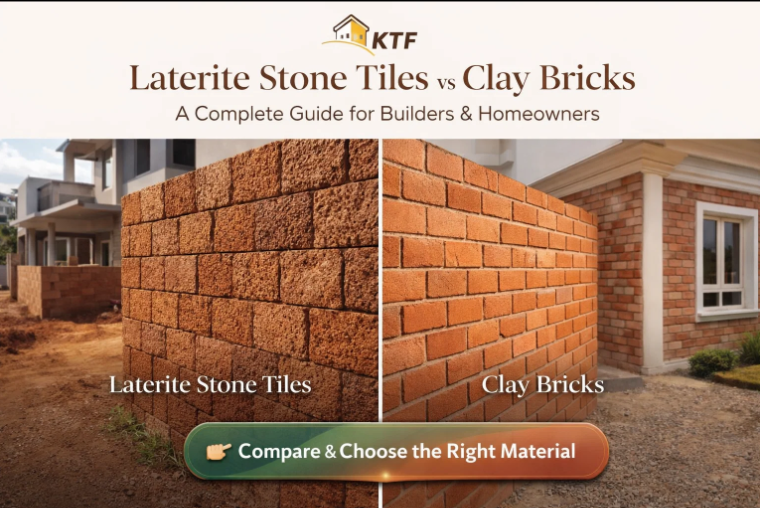
In the rapidly evolving landscape of Indian construction, choosing the right walling and flooring material is no longer just about aesthetics, it is about survival against rising temperatures and increasing material costs. A common misconception among new property owners is that all “red” building blocks are created equal. However, the debate of laterite stone tiles vs clay bricks reveals two very different paths for your project’s longevity.
For Builders & Construction Contractors, the choice affects labor speed; for Architects, it dictates the thermal footprint; and for Homeowners, it determines the monthly electricity bill for cooling. As we move through 2026, the shift toward sustainable, earth-born materials has never been more critical. This guide, backed by Kerala Tiles’ 20+ years of expertise, will explore everything from structural integrity in Thrissur’s humid climate to the cost-efficiency of sourcing in Bangalore.
ONE-MINUTE SUMMARY
Choosing between laterite stone tiles vs clay bricks can significantly impact your construction cost, comfort, and long-term durability. This guide by Kerala Tiles breaks down the differences in strength, thermal efficiency, maintenance, and cost—helping builders, architects, and homeowners make a confident, climate-smart decision.
Laterite Stone Tiles vs Clay Bricks
Before comparing them, we must understand the fundamental DNA of these materials.
What Are Laterite Stone Tiles?
Laterite stone tiles are derived from natural rock soil types rich in iron and aluminum. Unlike manufactured products, these are literally “cut from the earth.” In regions like Kerala and coastal Karnataka, laterite is quarried in large blocks and then precision-cut into thinner tiles or structural blocks. Laterite Stone Tiles by Kerala Tiles are prized for their porous nature, which allows the building to “breathe,” and their characteristic deep red hue that hardens over time when exposed to the atmosphere.

Read More On: Complete Guide on Laterite Stone Tiles in Bangalore
What Are Clay Bricks?
Clay bricks are man-made units produced by molding a mixture of clay and water, which is then dried and fired in a kiln at high temperatures. While they have been the backbone of Indian masonry for centuries, many modern builders are now asking: are laterite bricks good for house construction compared to the traditional burnt clay variety? While clay bricks offer uniformity, they often lack the natural thermal properties found in raw stone.
Key Differences
When evaluating laterite stone tiles vs clay bricks, we must look beyond the surface.
Material Composition & Structural Strength
-
Clay Bricks: These have high compressive strength but can be brittle. Their quality depends entirely on the soil used and the consistency of the kiln firing.
-
Laterite Stone Tiles: Laterite is unique because it is relatively soft when underground but becomes exceptionally hard and durable once quarried and exposed to air.
-
Suitability: While clay bricks are standard for high-rise infill, laterite is the gold standard for load-bearing low-rise and mid-rise structures due to its massive density and age-related hardening.
Thermal Efficiency & Climate Suitability
The most significant factor in the laterite stone vs clay bricks for thermal efficiency debate is heat retention.
-
The Cooling Effect: Laterite has a high thermal mass. In hot and humid regions, laterite walls absorb heat during the day and release it slowly at night, keeping interiors significantly cooler.
-
Clay’s Limitations: Standard clay bricks tend to heat up faster, often requiring thicker plastering or additional insulation to match the natural cooling provided by laterite. For those asking which is better laterite or clay bricks for Kerala climate, laterite is almost always the winner for natural temperature regulation.
Cost, Installation & Maintenance Comparison
Budget is often the deciding factor for Real Estate Developers and Property Investors.
Initial Cost vs Long-Term Value
While the “per unit” cost of a clay brick might seem lower, the total project cost tells a different story.
-
Plastering Savings: Laterite tiles often feature a beautiful natural texture that allows for “exposed” masonry. This eliminates the need for expensive cement plastering and frequent repainting.
-
Energy Bills: The thermal insulation of laterite leads to long-term savings on air conditioning.
Installation Time & Skill Requirements
Installing Laterite Stone Tiles requires precision. However, because the tiles are often larger than standard bricks, the “coverage per hour” for a skilled mason can be higher. For projects in urban hubs, finding reliable Laterite Stone Tiles Manufacturers in Bangalore ensures that the dimensions are consistent, reducing wastage and labor time.
Maintenance & Durability Over Time
When considering maintenance laterite stone tiles vs clay bricks, laterite is remarkably low-maintenance. It is resistant to salt air (ideal for coastal areas) and does not suffer from “efflorescence” (that white powdery substance) as often as poorly fired clay bricks do.
Flooring & Design Considerations
Beyond walls, many homeowners are now looking at the ground beneath their feet.
Are Laterite Tiles Better Than Clay Bricks for Flooring?
For outdoor pathways, courtyards, and even rustic indoor flooring, are laterite tiles better than clay bricks for flooring? The answer is yes for slip resistance and heavy load handling. Laterite tiles provide a high-friction surface that is naturally cool to walk on barefoot, unlike clay pavers which can become slippery or uncomfortably hot in direct sunlight.
Architects’ Perspective on Aesthetics & Sustainability
Modern architects prefer laterite stone tiles for “Green Building” certifications. Because they require minimal processing compared to the high-energy kiln firing of clay bricks, their carbon footprint is significantly lower. The natural, variegated texture offers a “Biophilic” design element that manufactured bricks simply cannot replicate.
Best Choice by User Type
| User Type | Recommended Material | Why? |
| Builders & Contractors | Laterite (Bulk) | Speed of construction and reduced plastering costs. |
| Homeowners | Laterite Tiles | Superior cooling and “forever-home” durability. |
| Developers | Hybrid Approach | Clay for high-rise interiors; Laterite for facades/premium units. |
For those looking for a Wholesale laterite tile Supplier in Thrissur, sourcing directly from manufacturers like Kerala Tiles ensures price stability and high-grade quality for large-scale developments.
Why Builders Trust Kerala Tiles
As a premier Best laterite tile supplier in Bangalore and Kerala, we understand the local nuances of construction.
“At Kerala Tiles, we manufacture laterite stone tiles engineered for Indian climate performance and long-term durability. We don’t just sell stone; we provide a thermal solution for modern living.” – Head of Manufacturing, Kerala Tiles
We provide Laterite Stone Tiles by Kerala Tiles to elite developers who refuse to compromise on structural integrity. Whether you are searching for Laterite Stone Tiles Dealers in Bangalore or need a custom shipment in Kerala, our 20 years of logistics experience ensures your project stays on schedule.
FAQs
1. Which is better, laterite stone tiles or clay bricks?
It depends on your goal. For thermal cooling and natural aesthetics, laterite stone tiles vs clay bricks usually sees laterite winning. For standard high-rise partition walls, clay bricks are more common.
2. Are laterite bricks good for house construction?
Yes, are laterite bricks good for house building? They are excellent! They are eco-friendly, provide great insulation, and become stronger over decades.
3. Are laterite tiles suitable for flooring in hot climates?
Absolutely. When asking are laterite tiles better than clay bricks for flooring, laterite wins on temperature control and natural slip resistance.
4. Where can I buy laterite stone tiles in Bangalore?
You can buy laterite stone tiles in Bangalore directly from Kerala Tiles. We offer premium grades that are perfect for the city’s unique weather.
Which Material Should You Choose?
The battle of laterite stone tiles vs clay bricks comes down to your vision. If you value a home that stays cool naturally, looks timeless, and supports sustainable building practices, Laterite Stone Tiles by Kerala Tiles is the superior investment. While clay bricks serve a traditional purpose, the future of climate-resilient architecture lies in the stone.
Take the Next Step for Your Project
Don’t leave your construction quality to chance. Get expert advice and the best market rates today.
-
📞 Call Kerala Tiles: Get a free cost estimate at +91 7411891510
-
📍 Visit Us: Get directions to Kerala Tiles – Richmond Road, Bangalore

About Kerala Tiles Factory Author – Kerala Tiles Factory is one of the most trusted Tiles Manufacturers in Bangalore, known for producing high-quality clay tiles that combine durability, aesthetic appeal, and traditional craftsmanship. With decades of expertise, we offer a wide range of roofing tiles, flooring tiles, wall tiles, exterior tiles, and custom tile solutions designed for both residential and commercial projects. Our tiles are crafted using eco-friendly processes, ensuring long-lasting performance, weather resistance, and superior strength, making us a preferred choice among architects, builders, and homeowners in Bangalore.
Our commitment to innovation and customer satisfaction has helped us become a leading tile supplier and clay tile manufacturer in the region. We focus on delivering premium-quality products at competitive prices, backed by reliable service and timely delivery. At Kerala Tiles Factory, we strive to exceed expectations by providing sustainable, modern, and high-performance tile solutions that elevate the beauty and value of every space.